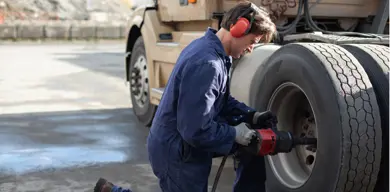

When waste haul trucks are off the road and unavailable for collections – due to repairs, maintenance, or accidents – the clock is ticking. These complex vehicles rely on many moving parts working in sync, and when one fails, the impact is immediate. Vehicle downtime causes disruption, impacting productivity, profitability, and customer satisfaction.
For waste fleet managers, that means keeping planned maintenance on schedule and avoiding unplanned repairs at all costs. An effective maintenance strategy is key, but it’s not your only lever. Operators can also employ real-time engine monitoring, optimized routing, and drill down into driver behaviors. Together, these measures keep waste vehicles running smoothly, day in, day out.
why downtime is a major issue for waste fleets?
If a waste truck is out of action, it triggers a chain of events designed to minimize disruption to customers.
In the short term, collections are pushed back while repairs take place. Alternatively, other trucks might be drafted to cover the route, with crews working overtime to catch up on missed collections.
If the breakdown is major, and downtime threatens to extend beyond a few days, it may be necessary to rent a replacement vehicle. Either way, the costs soon begin to mount up – and that’s before you factor in the impact on public sanitation and any reputational damage that may be incurred as a result.
In short, extra journeys, time spent catching up on collections, and additional maintenance or repairs increase overall waste collection costs. Older or poorly maintained trucks can see 20–40% higher annual maintenance costs, with breakdowns driving additional overtime and service disruption.
how to reduce fleet maintenance downtime?
There are several ways in which waste collection companies can enhance vehicle reliability and reduce downtime:
implement a preventive maintenance plan
One way to reduce downtime is by preventing breakdowns before they occur.
An effective preventive maintenance schedule should include oil changes, brake inspections and tire rotations, plus regular monitoring of hydraulic systems, compactors, and lifting mechanisms. These checks can detect worn components and minor faults that could cause equipment failure.
Thanks to the harsh conditions in which waste trucks operate, with frequent stops and heavy loads, minor problems can quickly escalate into expensive repairs. Preventive maintenance software minimizes these unexpected failures and extends vehicle lifespan.
utilize real-time monitoring technology
Technology also provides innovative ways to monitor vehicle performance and reduce downtime.
Telematics systems can be used to monitor and flag issues such as: engine health, overheating, battery health, and hydraulic pressure anomalies. Combining GPS tracking and onboard diagnostics also provides real-time insights into truck performance and fuel efficiency.
Using this information, waste fleet managers can detect potential problems early, schedule repairs conveniently, and even analyze data to work out which vehicles are more prone to faults and which are the most efficient.
optimize routes to reduce vehicle stress
Optimizing waste collection routes reduces wear and tear on trucks.
By avoiding heavy traffic and congestion, fleets can minimize the damage done by constant stop-start driving, reduce idling time, and eliminate unnecessary mileage. Overall, this decreases engine strain, resulting in fewer mechanical failures and less downtime.
Not only that, but it can help ensure work is distributed evenly across your fleet, preventing any single vehicle from being overused.
undertake daily inspections
Pre- and post trip inspections help catch minor issues before they escalate into major failures.
Educate drivers on warning lights and alerts and train them to identify early signs of mechanical failure, such as hydraulic leaks. If the compactor or lift apparatus fail mid-route, it can render the truck unusable for collections, even if the vehicle itself is still running.
Establish a clear fault reporting system and encourage drivers to record any unusual vehicle noises or performance irregularities, so issues are fixed before a breakdown, preventing unscheduled, overnight repairs.
focus on driving behavior
Driving behaviors such as harsh braking and excessive idling contribute to vehicle wear.
Over time, high-stress maneuvers like rapid acceleration and quick cornering put excessive strain on engines and braking systems, leading to increased component failure. Using telematics to monitor these behaviors in real-time allows fleet managers to target training and correct issues before they cause a breakdown.
Similarly, improper use of hydraulic or compactor systems can cause damage to specialized equipment, so regular training is advisable.
manage workshop time effectively
Sometimes problems occur because vehicle repairs take longer than expected.
One of the ways you can combat this is by using digital workshop management tools. This simplifies fleet maintenance operations by standardizing repair procedures, providing detailed steps and parts lists for technicians, and automating the approvals process.
Digital inventory systems also ensure critical spare parts are in stock so there’s no need to wait for components or pay for expedited shipping, which can delay repairs and extend downtime.
digital tools: why data is key to cutting downtime
For many waste operators, fleet maintenance is still a reactive ‘run it til it breaks’ function. Maintenance schedules are managed using spreadsheets or whiteboards and it’s easy for faults to slip through the cracks leading to unplanned downtime.
Implementing digital fleet maintenance and fleet management tools helps put an end to this ad hoc approach by shifting maintenance from a reactive to a proactive model. And with data in one centralized platform, waste companies can also link different aspects of fleet management including:
- maintenance scheduling
- vehicle diagnostics
- performance monitoring
- route efficiency
- inventory management
By consolidating these functions into a single platform, waste fleet managers can clearly see how to reduce fleet maintenance downtime and ensure minimal disruption to refuse collections.
a sustainable approach to waste fleet strategy
Taking an integrated approach to vehicle downtime is key to long-term fleet strategy. For example, it can provide useful information about vehicle health and repair trends so you can replace refuse collection trucks before their reliability drops off.
Or perhaps you’re thinking of transitioning to electric models? With accurate data about current vehicle performance, you’re better equipped to make decisions around lifecycle costs and sustainability goals.
Overall, a data-led approach to reducing downtime can help lower the total cost of ownership (TCO) and ensure operational resilience.
key benefits of cutting downtime
Although investing in technology-driven solutions to reduce vehicle downtime can seem like an added expense, the positive pay-off can be significant, resulting in:
- Lower maintenance costs: By automating preventive maintenance workflows, AMCS Fleet Maintenance software can reduce downtime and cut fleet maintenance costs by up to 20%.
- Improved truck utilization: Companies can keep trucks in service longer and minimize capital expenditure on new waste collection trucks.
- Increased service reliability: By avoiding unplanned breakdowns, waste collection routes remain on schedule, reducing call-backs and the need for costly vehicle rentals.
- Fewer customer complaints: Preventing breakdowns reduces missed or delayed pick ups and ensures consistent service delivery.
the unexpected upside to reducing downtime
When a top-five U.S. waste hauler implemented AMCS Fleet Maintenance for its 5,500 trucks, it discovered an unexpected opportunity to significantly reduce its parts inventory.
Implementing the software across its 200 maintenance facilities enabled this organization to track costs more accurately. Remarkably, it found that it was carrying several obsolete parts and many that had not been used in over a year.
In effect, this enabled them to streamline its component stocks, simplifying maintenance for faster repairs, and eliminated over $2 million worth of parts from its inventory.
building a resilient waste fleet
When looking to minimize vehicle off-road time, an effective maintenance strategy is a great starting point. But it shouldn’t be your only move. By integrating proactive maintenance scheduling with real-time diagnostics, driver training, and digital workshop tools you can reduce downtime even further.
This preemptive approach keeps waste trucks on the road, ensuring you spend less time dealing with unplanned downtime and more time delivering for the communities you serve.
Find out how AMCS Fleet Maintenance software can help you improve service reliability by watching our interactive demo.
see our software in action
We'll show you what it does. You decide if it fits.